Alt Creative / Selected work
The Batman
2022
The Batman
Design / CGI
It's a true honor to have contributed to the renowned legacy of Batman and some of the most iconic pieces of pop culture.
01 / The invitation
A perfect convergence.
I had worked with Rupert Sanders on Ghost in the Shell, and Rupert introduced me to production designer James Chinlund. James and I connected immediately. When he asked whether I would be interested in designing the Batmobile for Matt Reeves’ Batman, I was completely elated.
I have followed Batman my entire life. I also love cars, designing them, and building my own. Those interests came together in a way that felt almost impossible to imagine beforehand. To me, there is no more meaningful car in movie history than the Batmobile. What it represents within the franchise made the opportunity feel enormous.
The Batman / 01
Vehicle Studies
The Batman / 02
Body Development
The Batman / Design process
Design iterations
02 / Finding the character
Designing as Bruce Wayne.
I approached the project almost as a method actor would approach a role. I tried to imagine that I was Bruce Wayne, building this car myself in my garage. If I were a broken person with an incessant need to seek justice, and I had his resources, skills, and abilities, what would I make?
I had watched Matt’s films and was drawn to how strongly he works through theme. I wanted to understand this version of Bruce through the design, allowing the car to carry something of the person inside it. The intention was always to make an object that belonged to his world and could plausibly have been built by him.
The Batman / 03
Mechanical Detail


Here are a few selects of my favorite pieces during my time working on The Batman production.
The Batman / 04
Mechanical Detail

03 / Form and meaning
A shell around something broken.
I thought about Bruce as a protected, fractured person, with Batman as the outside persona he has constructed. The car became a metaphor for that relationship: a cage holding his fear and pain, surrounded by a shell intended to invoke fear in others.
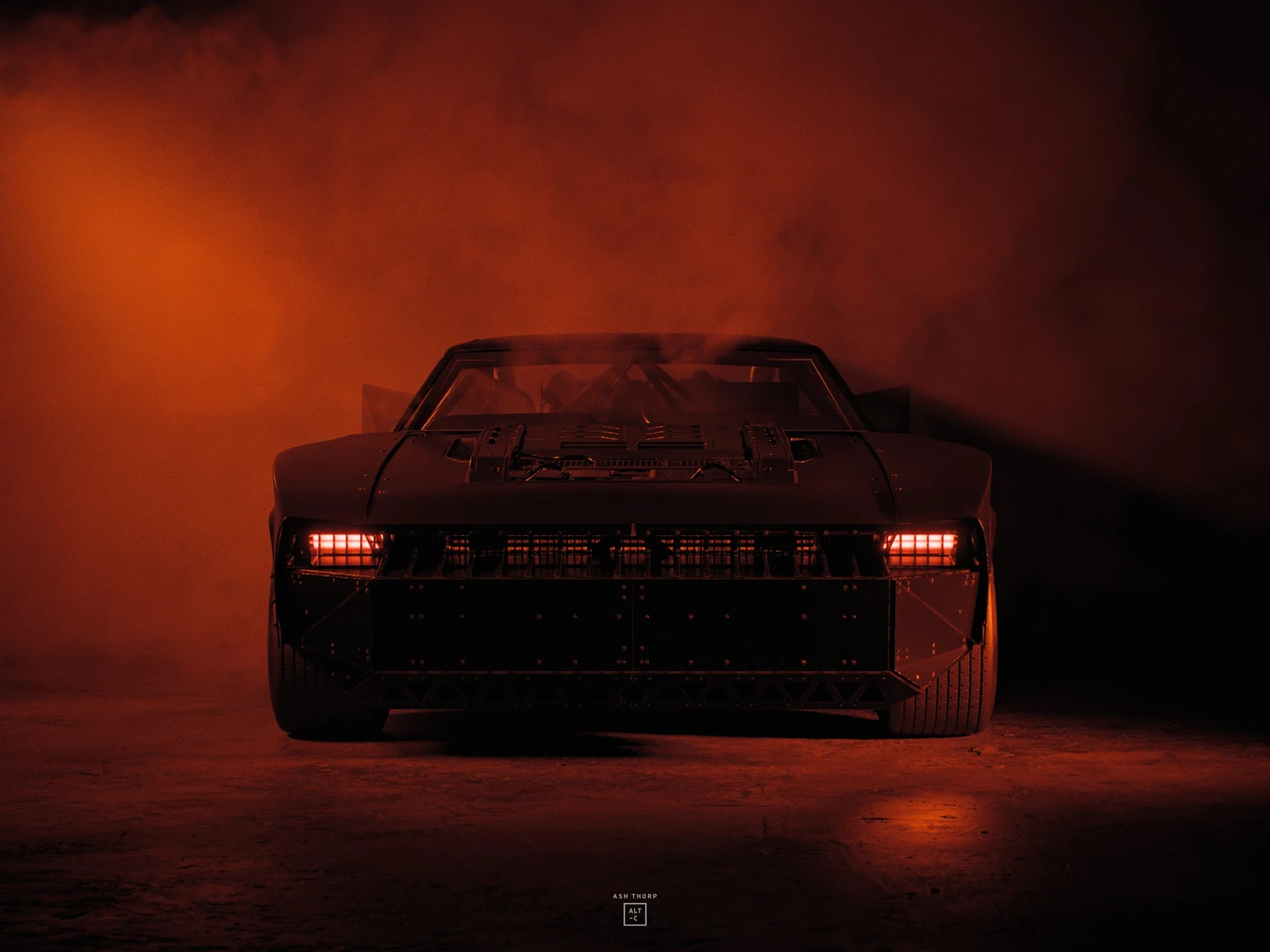
The Charger gave me a way to connect that idea to the body. Seen from above, its shape suggested the two ears of Batman’s cowl. Those kinds of motifs helped the design feel connected to the character without having to state the connection literally.
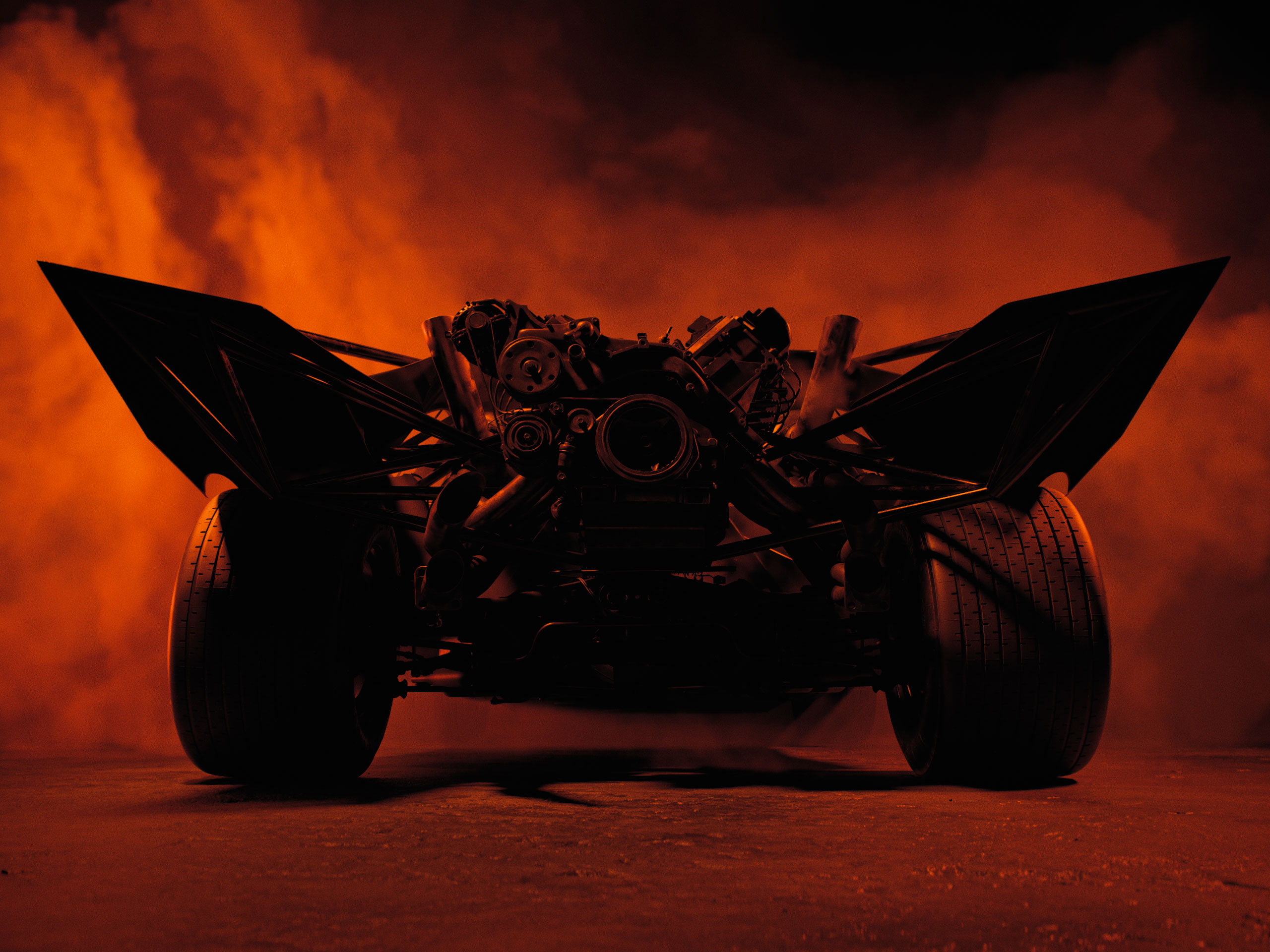
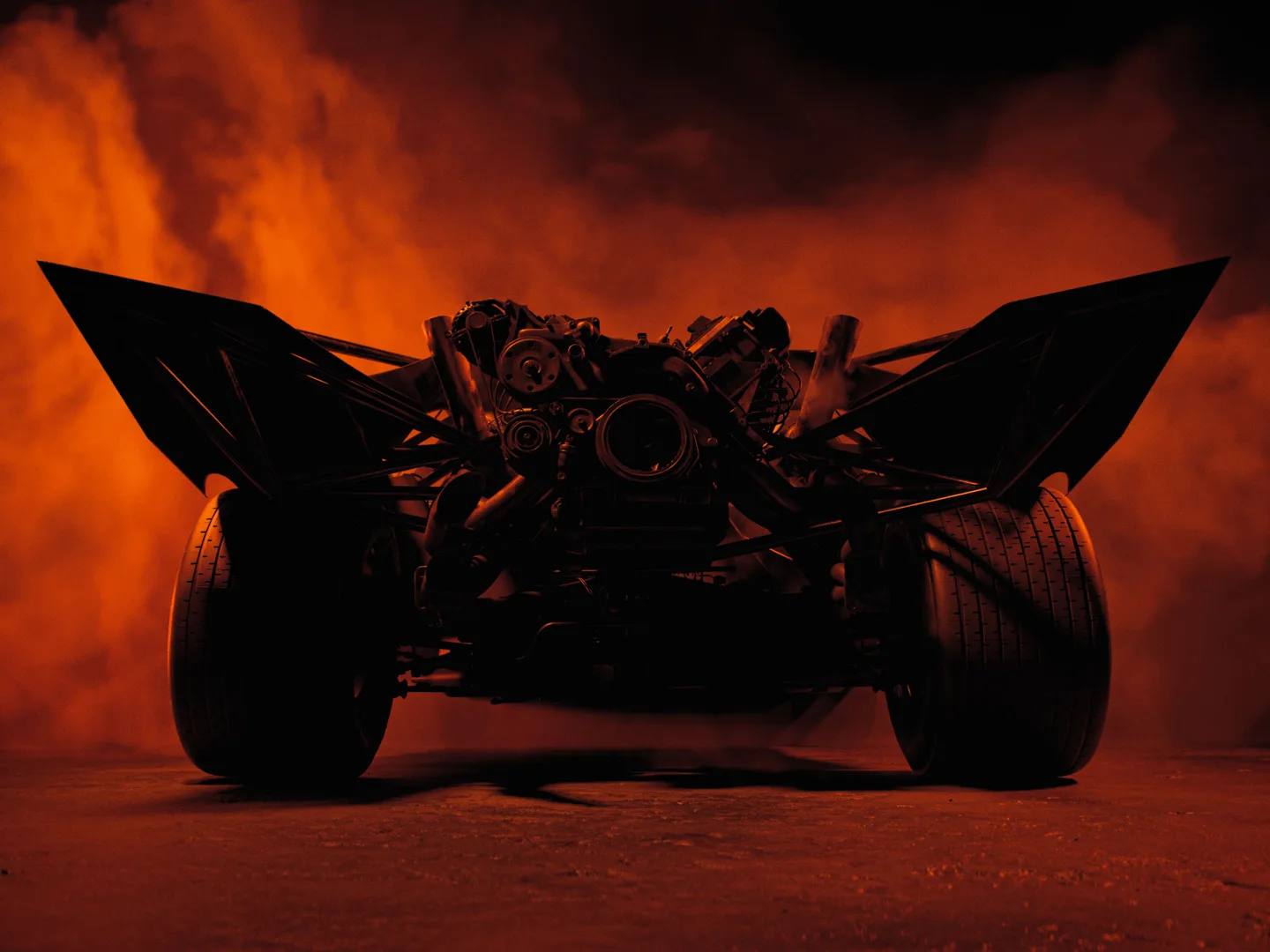
Matt also referenced Christine. An early rear view with the engine exposed became an important point of connection between us. He responded to the idea of the heart of the beast sticking out: something alive, almost a monster. That exposed machinery gave the car a presence beyond its silhouette.
The Batman / 05
Mechanical Detail


A glimpse into my creative process for the Batmobile's iconic shapes and design language of the film.
The Batman / 06
Light Studies

04 / Building trust
Six ways into the design.
My first concepts were rough kitbashed models in Cinema 4D, assembled from different car parts and simple low-poly forms. I wanted to cast a wide net quickly. Was this a four-wheeled car, something closer to an off-road vehicle, or a hybrid between a car and a tank? I presented roughly six variations to find the boundaries of what Matt and James were imagining.
The brief was generous. It was built around words and feelings, including power and something visceral, rather than a long list of constraints. Their feedback helped me find the voice of the car. They did not want another Tumbler, and those early explorations helped us establish a different direction.
For me, those first presentations are also about trust. I want to demonstrate that I understand the project and can contribute to it, so the relationship can develop into a real collaboration. Once Matt and James saw where I was heading, their support gave me the freedom to keep refining the design.
The Batman / 07
Light Studies


The Batman / 08
Bat Bike

The Batman / 09
Bat Bike


“It’s a true honor to have contributed to the renowned legacy of Batman and some of the most iconic pieces of pop culture.”

05 / From design to production
Something Bruce could build.
My focus was on the design and its details. The team at Warner Bros. took that work into 3D CAD and translated it into a production-ready vehicle. Seeing that expertise bring the design into the physical world was an extraordinary part of the process.
I wanted the car to feel grounded in real machinery and in Bruce’s ability to build it himself. James and Matt gave me the freedom to think that way. Because I build my own cars, I felt a personal connection to that approach: the way a vehicle comes together, the choices its builder makes, and the character those choices leave in it.
The Batman / 10
Drifter Bike

Conceptual renders for Bruce Wayne’s Drifter bike: the understated motorcycle he uses while working as a detective.
The Batman / 11
Drifter Bike


06 / Seeing it on screen
The moment it became real.
Seeing the finished Batmobile on screen was one of the most rewarding and cathartic experiences of my career. I cried watching it. There was so much emotion in seeing something I had spent that time imagining become part of the film.
Greig Fraser is one of my favorite directors of photography. Seeing how he lit and photographed the car, how Matt brought the sequence together, and how James built the world around it was an incredible experience. The design was now part of something much larger, shaped by all of those people and their work.
To this day, it remains the proudest moment I have had working in film. It brought together a character I have loved my whole life, my fascination with cars, and a collaboration that gave me the freedom to contribute something deeply personal.
Project notes & credits +
Through the desing process I presented various options and concepts. Here was one of my personal favorites.
A Batman film isn't complete without a Batcycle.
Here is a look into the design process and some final render frames that were translated into the production of the film.
Bruce Wayne prefers the Drifter Bike when he's going undercover.
These designs are an amalgomation of my favorite kind of Cafe Racer and hot rod parts kit bashed together into a working prototype.
Director - Matt Reeves Production designer - James Chinlund Batmobile/Batcycle designer - Ash Thorp Additional credit to the Design + Production team - Ben Last, Patrick Dunn Baker, Daniel Frank, Haisu Wang, Joe Hiura, Dominic Tuohy